
Things begin ...
Nurture wins over genetics sometimes

The fascination with the Middle East, deserts, and tribes that has been a large part of my life owes much to Alexander Mackenzie (my maternal grandfather), the Presbyterian church, and the Navahos long before I ever got to the Middle East.
Alexander Mackenzie, my mother’s father, was a huge presence in my childhood, largely because he SAW me and treated me like an intellectual equal even when I was still a child. We started out as a family in his house in Chicago and he moved with us to our new home in Clarendon Hills in 1950. The second floor of our house was half finished providing Grandpa a bedroom and a sitting area that was nearly half of the second floor.
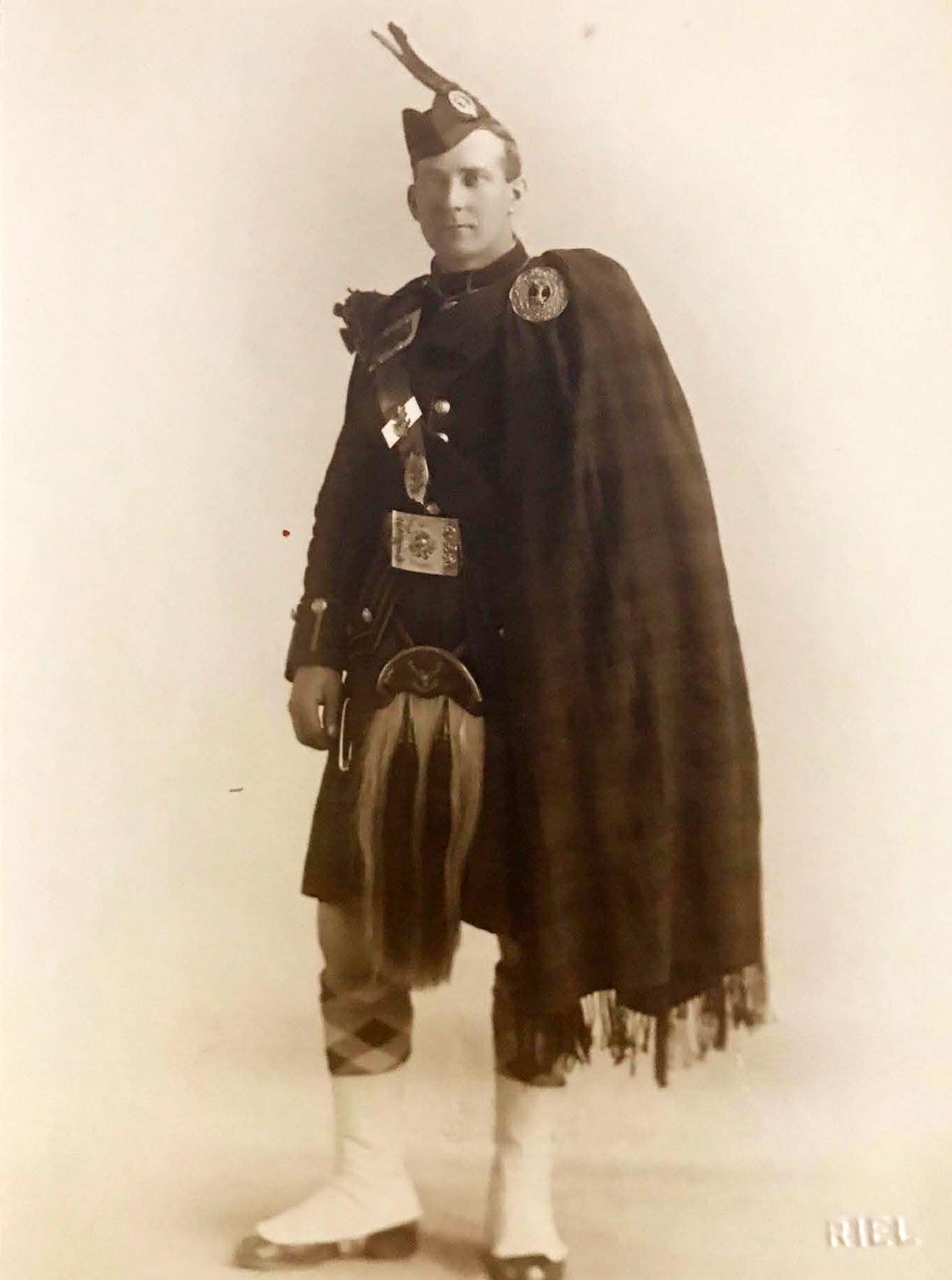
Alexander MacKenzie circa 1919 MacKenzie highland dress
Alex was a true 19th century Scot despite living more than half of his life in the United States, very much the patriarch who expected unquestioning obedience. The fourth of five sons (7th of 8 children), born in 1880 in the highland slopes of northwestern Scotland along Loch Broom in the village of Rhiroy, he was the son of a relatively poor crofter farming the slopes above the loch. Two of his brothers died before he emigrated to the US in 1910 (at the age of 30) but the eldest lived to inherit his father’s croft and land. Alex apprenticed as a carpenter/joiner in Dingwall. His emigration to the US in 1910 gave him opportunities he probably would never have had in Rhiroy, the crofting village in which his family had lived since his grandfather William’s time at the beginning of the 19th century.
At the age of 29 in 1910, he travelled on the SS Merion from Liverpool (a 12 day journey) to Philadelphia where his cousin Roddy already lived. It wasn’t long before he moved to Chicago, a town where carpentry skills were in demand. Four years later, he returned to Scotland to marry Margaret Maclennan from Loggie, 4 miles up the coast of Loch Broom from his family home in Rhiroy. They married in mid-April in Dingwall and embarked nearly immediately from Glasgow for New York on the SS Cameronia. Once through immigration, they headed to my grandfather’s apartment at 1741 N Central Park Avenue in Chicago. And my mother’s family began. Thirty-four years later I began.
My grandfather was an autodidact with an impressive library of books, predominately history, politics, and biographies (largely of leaders and wanderers). In his second floor bedroom there was also a beautiful old Zenith upright radio (lovingly preserved today by my brother Steve) which received both AM and FM as well as shortwave stations. As I studied French in junior and high school, the radio gave me wonderful opportunities to listen to French broadcasts from Quebec and France itself!
But the thing that set me off in Middle Eastern directions was a first American edition of T. E. Lawrence’s Seven Pillars of Wisdom. We were raised to reading. My parents read to us nearly every evening before bed. My grandfather recited poetry, Scottish and English, from memory and saw to it that we had poetry in the house if not in our lives. So probably about 1959 or 1960, when I was 11 or 12, he allowed me to read the book.
Seven Pillars of Wisdom was a revelation and an open door to Arabs, Arabic, the Middle East and dreams of other places. I read it straight through, though I flew through the more didactic sections. The story of the Arab Revolt was gripping enough but the personal growth and self knowledge Lawrence detailed was breathtaking for a kid just in junior high school. I loved the details of tribal life, of desert life and the camaraderie of the tribe. I’ve reread the book probably four or five times in my life and it accompanied throughout my moves around the Middle East and across the US.
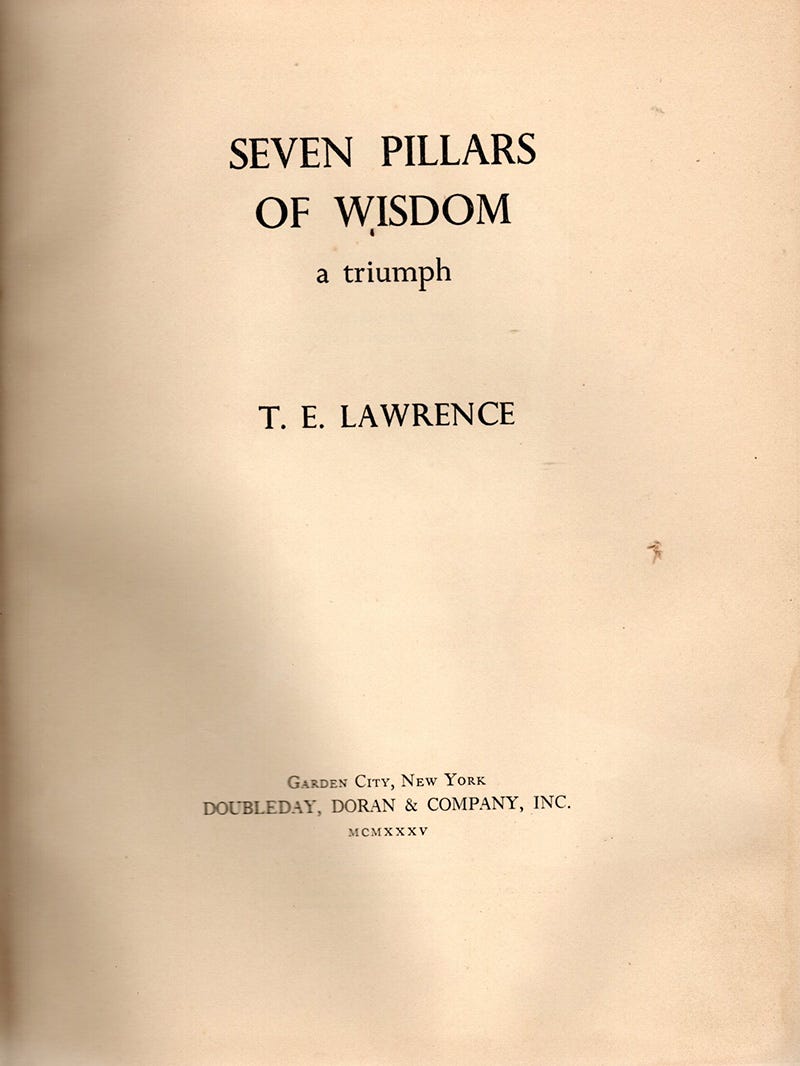
Seven Pillars of Wisdom, first US edition, 1935
Having finished the book the first time, I discovered the Teach Yourself series, old blue and yellow books that helped people learn new skills in the 1950s and 1960s and got the Teach Yourself Arabic book. I spent a hot Illinois summer trying to teach myself Arabic. Like a good middle schooler who had had penmanship drilled into him, I tried to make my Arabic look identical to the printed Arabic in the book. It wasn’t. It never occurred to me that Arabic, like English, would have a cursive equivalent and I shouldn’t expect my script to look like the book script.
I got hopelessly discouraged and asked a local language teacher on our block, Mrs Goldstein, if she could help. She couldn’t. It must have seemed odd to her that a neighbor boy would ask a Jewish teacher to teach him Arabic. I kept the Teach Yourself Arabic book through college but never progressed. When I was at Harvard Divinity School, I did take a semester of Arabic but the professor was dotty and the course was worse than my efforts in junior high school. It wasn’t until I lived in the Middle East and learned to speak Arabic that I made real progress.
Then in 1965, I met the desert. Community Presbyterian Church in Clarendon Hills (of course we were Presbyterians with a Scottish grandfather and his daughter) was in the second year of summer mission trips to the Navaho reservation in Arizona-New Mexico. My father who was by then a deacon in the church, thought I should make the trip (Yay!!). So, on July 4, 1965, we gathered in the church parking lot and set out for Nazlini, AZ. Our journey by car only took two days, arriving first at the mission and medical center at Ganado and then moving on to our temporary home on the Nazlini Hill overlooking the Nazlini valley.
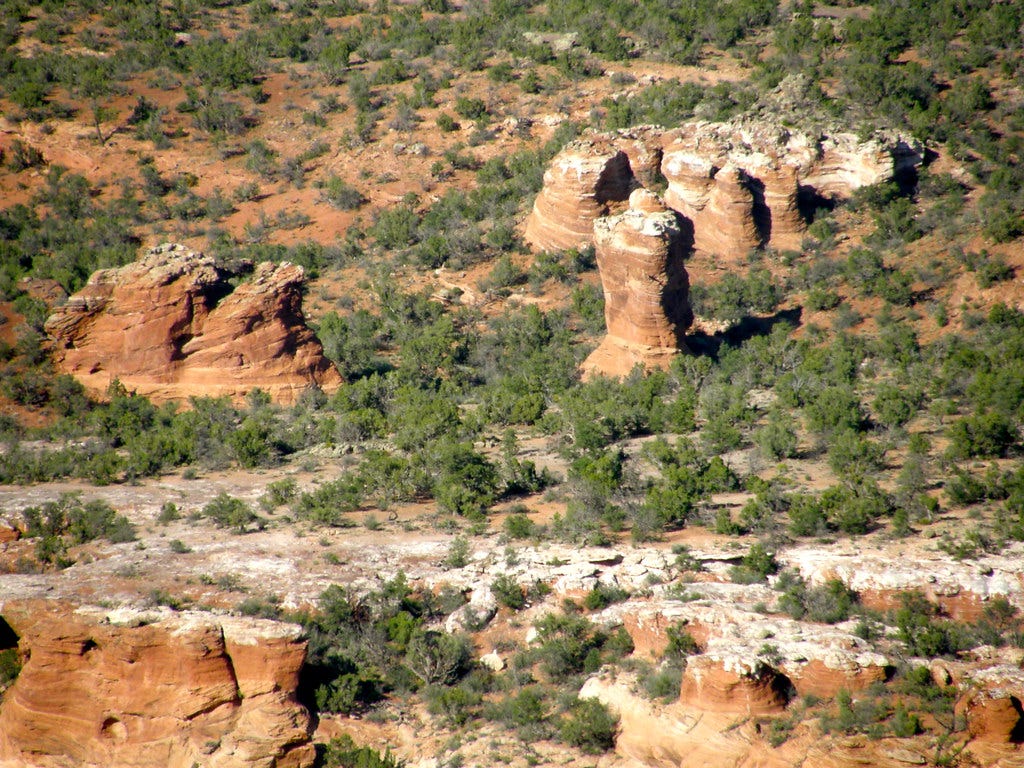
Nazlini countryside on the Navaho lands in Arizona
It was a trip of many wonderful surprises but foremost was the desert. Lawrence’s prose focused on people not landscape so I was unprepared for the beauty and the bare basicness of the Navaho lands. There is a feel to deserts of being in touch with the basics of life. The colors are rich and changeable. The sky is open and vistas are long.
As I would later discover in the Arabian peninsula, the desert was a background against which life struggled and triumphed. It came also with an altered perspective from our crowded midwestern towns: you could see for miles and miles and watch the weather arrive from a distance framed by the red, brown and yellow landforms. It was a land where people lived in small clusters and depended on their family and tribal connections for survival and improvement. And it was ancient. The Navaho had inhabited the area for millennia and had mastered life there.
To a seventeen year old boy it was a revelation. I made friends with the Navaho kids who came to our Bible study classes at the little church in Nazlini and they led me around the area, climbing up the cliffs to explore the ancient Anasazi ruins in the hills. They taught me some of their language and seemed to find me as exotic as I found them. It was my first experience of tribal culture, and I loved it. Together we climbed the hills of everchanging colors, explored ancient Anaasazi (“the old people) ruins. Their desert was far from empty, being full of sheep, goats, rattlesnakes and tarantulas, bats, wild dogs, donkeys, mules, horses, and birds galore. And as a reminder that we weren’t alone, the Navaho hogans and houses were dotted across the landscape at improbable intervals.
Every day was an adventure. We were back home by the end of July but it felt like we had been away for months. It was an experience truly unique and lasting that wasn’t equalled until I arrived in Kuwait’s corner of the Arabian desert eight years later. Then it felt like I was home again. The two years I spent in Egypt, mostly in Cairo, did not feel like an echo of Nazlini because Egypt was so heavily peopled that the desert really didn’t acquire much prominence.
Love this Mark!. Once again you've described a key time in your life, & your emotions around it, in compelling detail. I got a picture of the desert area in AZ in my minds eye. How cool that your reading & that trip made you interested in the desert--& then you lived in the Middle East.
Thanks again!